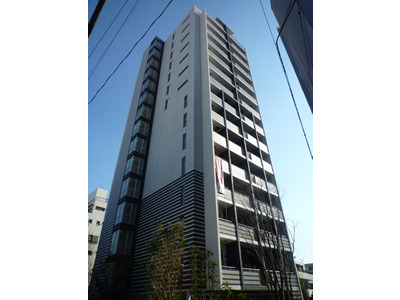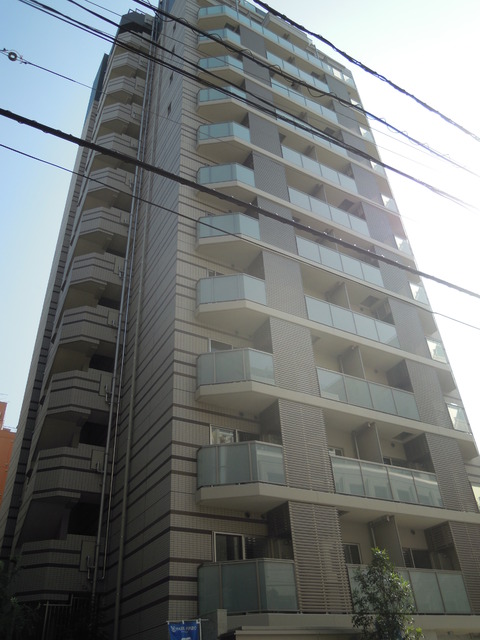

Hiroo Garden Hills is Tokyo’s original vintage mansion. Completed in 1987, this 1,181-unit complex across 6.6 hectares in Shibuya-ku’s Hiroo district set the standard for luxury residential living and continues to command premium prices nearly four decades later.
The development proved that Japanese condominiums could appreciate rather than depreciate when built and managed to exceptional standards. An average unit at Hiroo Garden Hills trades for around ¥300-400 million, while larger South Hill residences reach ¥878 million, representing 3-4x appreciation from their original 1987 values. Units rarely hit the market because residents have little reason to leave, and when they do, buyers move quickly.
It is within walking distance to Sacred Heart and Nishimachi international schools, National Azabu supermarket on-site, English-speaking medical facilities in the building, and a location at the center of Tokyo’s embassy district. The combination of proven long-term value, family-friendly infrastructure, and an established expat community makes this one of the few Tokyo properties where demand has never wavered.
The 2025 completion of Mita Garden Hills also marked the first use of the “Garden Hills” brand in 38 years, with developers Mitsui Fudosan and Mitsubishi Estate positioning it as Hiroo’s spiritual successor. That decision tells you everything about how the original is still regarded in the market.
Quick Facts
| Property Details | |
|---|---|
| Name | 広尾ガーデンヒルズ (Hiroo Garden Hills) |
| Location | 4-chome Hiroo, Shibuya-ku, Tokyo |
| Completion | February 1987 (phased construction 1983-1987) |
| Building Type | 15 residential buildings across 5 “Hills,” 5-12 floors |
| Structure | SRC (Steel Reinforced Concrete) |
| Total Units | 1,181 |
| Unit Sizes | 53.4 sqm to 362.2 sqm |
| Site Area | Approximately 66,000 sqm (6.6 hectares) |
| Developers | Sumitomo Realty, Mitsui Fudosan, Mitsubishi Estate, Dai-ichi Life Insurance |
| Architects | Endo Architecture Design Office + Mitsubishi Estate Design Division |
| General Contractors | Shimizu, Kajima, Taisei, Obayashi, Mitsui Construction, Mitsubishi Construction |
Location & Access
Hiroo Garden Hills sits at the intersection of Shibuya-ku and Minato-ku, in a neighborhood that has functioned as Tokyo’s primary international district for decades. The area’s character comes from the concentration of embassies, international schools, and businesses that cater to non-Japanese residents, which means English is commonly spoken at local shops, restaurants, and medical facilities.
Hiroo Station on the Tokyo Metro Hibiya Line is the primary transit point, with walking times ranging from 3 to 7 minutes depending on which building you live in. East Hill residents are closest, while North Hill adds a few extra minutes. The Hibiya Line runs directly to Roppongi (one stop), Ebisu (one stop), Ginza (13 minutes), and Kasumigaseki (9 minutes), which covers most business and entertainment destinations without transfers.
Shibuya is roughly 2 kilometers away and accessible by bus or a short taxi ride. Haneda Airport takes approximately 30-40 minutes by taxi, depending on traffic, and Narita Airport is about 90 minutes via the Narita Express from Ebisu or Shinagawa.
The German Embassy sits directly across from Arisugawa Park, the French Embassy is a 7-minute walk, and the Chinese Embassy is 4 minutes from Hiroo Station. This diplomatic presence contributes to the area’s security and international atmosphere, with many embassy staff and their families choosing to live in Hiroo Garden Hills specifically because of the proximity to their workplaces.
Floor Plans & Unit Types

Hiroo Garden Hills offers an unusually wide range of unit sizes for a single development, spanning from 53.4 sqm studios to 362.2 sqm residences that rival standalone houses. The 15 buildings are organized into five distinct “Hills,” each with its own character and pricing.
East Hill (Buildings A, B, C) sits closest to Hiroo Station and offers views toward Tokyo Tower. South Hill (Buildings D, E, F) commands the highest prices, with dedicated security gates and a parking ratio exceeding 100%. Center Hill (Buildings G, H) sits above-ground-floor retail, including the National Azabu supermarket. West Hill (Buildings I, J, K) features distinctive yellow-toned exteriors. North Hill (Buildings L, M, N, O) offers the most greenery and connects to Hiroo North Park.
The original 1987 design emphasized “center-in” layouts where entry halls sit in the middle of the unit, maximizing natural light to all rooms while minimizing wasted corridor space. No unit windows face common corridors, so every room has exterior exposure for privacy. Corner units feature L-shaped balconies, and many units include dedicated trunkroom storage in the basement.
One detail that surprises buyers unfamiliar with Hiroo Garden Hills: carpet flooring is mandatory throughout all units, a rule enforced since original construction to ensure sound insulation across the 2,500-resident community.
1LDK Units (50-70 sqm)
One-bedroom layouts suit singles or couples who want the Hiroo address without the price tag of larger configurations. These units typically feature open-plan living and dining areas, a separate bedroom with closet space, and the center-in entry layout that maximizes usable floor area.
Current listings for 1LDK units around 55 sqm start at approximately ¥220 million.
2LDK Units (70-100 sqm)
Two-bedroom configurations work well for small families or couples who need a home office. The larger end of this range approaches 100 sqm, providing comfortable space by Tokyo standards with two properly sized bedrooms, a combined living and dining area, and storage throughout.
Units around 80 sqm currently trade near ¥265 million.
3LDK Units (80-125 sqm)
Three-bedroom layouts represent the most common family configuration and account for the bulk of resale activity. These units provide enough space for families with children while remaining practical for everyday maintenance.
South Hill 3LDK units command the highest premiums, with recent listings for 127 sqm units in Building D reaching ¥878 million.
4LDK and Larger Units (150+ sqm)
The largest units exceed 150 sqm and can reach up to 362 sqm for mansion-style residences. These rarely come to market because owners tend to hold them long-term, and when they do, they attract buyers seeking house-like space within a managed condominium environment.
Pricing & Rental Rates
Hiroo Garden Hills has demonstrated price appreciation that defies the typical Japanese condominium pattern of depreciation. An average unit has appreciated 3-4x from its original 1987 price, and the development’s status as Tokyo’s benchmark vintage mansion means demand consistently exceeds supply.
Original prices in 1987 ranged from ¥80 million to ¥490 million, which translated to roughly ¥760,000 to ¥1.27 million per sqm at the time. Initial sales created unprecedented demand, with an average lottery ratio of 40.8x and a maximum competition ratio of 209x for the most desirable units. That level of buyer interest was a social phenomenon in 1980s Japan and established Hiroo Garden Hills as a status address from day one.
Current resale prices range from approximately ¥200 million to ¥878 million, depending on unit size, building, and floor.
Recent transaction data shows prices clustering between ¥1.83 million and ¥6.29 million per sqm, with a median of ¥4.1 million per sqm. South Hill units command the highest premiums, particularly Building D, where a 127 sqm 3LDK recently listed at ¥878 million (approximately ¥22.7 million per tsubo).
| Unit Type | Size | Recent Price Range | Price/sqm |
|---|---|---|---|
| 1LDK | 55-70 sqm | ¥198M – ¥250M | ¥3.5M – ¥4.0M |
| 2LDK | 70-100 sqm | ¥265M – ¥400M | ¥3.5M – ¥4.5M |
| 3LDK | 80-130 sqm | ¥318M – ¥878M | ¥4.0M – ¥6.9M |
| 4LDK+ | 150+ sqm | Rarely listed | Varies |
Monthly carrying costs include management fees of approximately ¥248-390 per sqm (roughly ¥21,000-60,000 depending on unit size) and repair reserve fees of ¥172-191 per sqm (roughly ¥14,000-30,000 monthly). Additional charges may apply for parking, hot water base fees, and building association dues.
Rental rates range from ¥180,000 to ¥1.2 million per month, with 3LDK units around 150 sqm commanding the top end of that range. Surface yields hover around 2.26%, which reflects the property’s status as a capital appreciation play rather than an income investment. Owners who purchased in 1987 and held through today have seen returns that far exceed what rental income alone would have provided.
Amenities & Building Services
What sets Hiroo Garden Hills apart from other luxury developments in Tokyo is the self-contained community that has evolved over nearly four decades.
The Sunken Garden at Center Hill’s ground floor houses a 14-store commercial complex that enables residents to meet virtually all daily needs without leaving the property.
On-Site Retail & Services
National Azabu supermarket anchors the retail offering and has operated on-site since the development opened. The store stocks extensive imported goods with English labeling throughout, which explains why it has become a destination for Tokyo’s international community rather than just a convenience for residents.
Additional retail includes Segafredo Zanetti Espresso and Pebble café for coffee and casual dining, Hiroo Garden Hills Clinic for internal medicine and other specialties, Irie Dental Clinic and Ayame Pharmacy for complete medical support, Fitness Club Hiroo Garden Hills Studio and a Pilates salon for exercise, Elroad Hair Salon and Uka Minette Nail Salon for beauty services, Musashino Cleaning for dry cleaning, and MUFG Bank and SMBC ATMs for banking.
Gardens & Outdoor Space
The landscaping has matured into what residents call the “Forest of Hiroo.” The original planting included 80 zelkova trees, 45 camphor trees, 34 plum trees, 43 cherry trees, and 370 osmanthus trees, and after nearly 40 years of growth, the mature trees now reach 8-9 stories in height.
The effect is a genuine urban forest rather than decorative greenery, and it creates a sense of seclusion that feels rare in central Tokyo. The design places 75% of parking underground to preserve the garden’s aesthetics, keeping vehicles and pedestrians separated at the surface.
Building Management & Governance
Building management operates 24 hours a day with front desk service, and the governance structure includes branch general meetings for each Hill, as well as an overall general meeting for common issues. Seven specialized committees handle Environment, Accounting, General Affairs, Community Activities, Public Relations, Pets, and Landscaping.
Residents include executives, lawyers, financiers, and academics who bring professional expertise to governance, thereby creating management standards typically found only in commercial properties rather than residential buildings.
Security & Parking
Security features include auto-locking entry systems, video intercoms, and 24-hour staffed management. The development’s scale and established community culture mean unfamiliar faces are noticed, providing an additional layer of informal security beyond formal systems.
All parking is underground in mechanical systems, though spaces are limited and often require waitlisting for new residents. Pets are permitted within guidelines set by the dedicated Pets committee.
Target Residents
Hiroo Garden Hills attracts a specific demographic of buyers and renters who prioritize established community, proven value retention, and proximity to international schools over the novelty of newer developments.
Multi-Generational Japanese Families
One of the most distinctive characteristics of Hiroo Garden Hills is the prevalence of multi-generational ownership. Families who purchased units in 1987 have passed them to their children or helped their children purchase nearby units, creating a community continuity that newer developments cannot replicate.
This pattern means the building attracts Japanese families who value stability and long-term residence over speculative investment. The strict management rules and active governance committees appeal to residents who want to maintain property values and community standards over decades rather than years.
Diplomats & Embassy Staff
The neighborhood’s established diplomatic community makes Hiroo Garden Hills a natural choice for foreign government personnel. The proximity to embassies, international schools, and English-friendly services means diplomatic families can settle into a functioning support network immediately upon arrival.
The security infrastructure, gated community feel, and 24-hour management provide the level of safety that embassy security offices typically require for staff housing. Many diplomatic families have lived at Hiroo Garden Hills across multiple postings, returning to the same development when reassigned to Tokyo.
International School Families
Families with children at Sacred Heart or Nishimachi often choose Hiroo Garden Hills for the short walk to school. The ability to send children to school on foot, without navigating Tokyo’s train system, is a significant quality-of-life advantage that becomes more valuable as children grow older and gain independence.
The development’s family-oriented facilities, including playgrounds, community events, and an active residents’ association, create an environment where children can develop friendships within the building that extend to their school communities.
Executives & High-Net-Worth Professionals
The combination of prestigious address, mature landscaping, and proven value appreciation attracts executives and professionals who want a residence that reflects their position without the flashiness of newer luxury towers.
Hiroo Garden Hills appeals to residents who prefer understated quality over architectural spectacle. The 1987 construction and established community signal a different kind of status than a penthouse in a newly completed tower, and that distinction matters to certain buyers.
Long-Term Investors
Investors who target Hiroo Garden Hills typically focus on long-term value preservation rather than rental yield. The development’s track record of 3-4x appreciation since 1987 demonstrates that well-managed vintage properties can outperform newer construction over extended holding periods.
The rental yield of approximately 2.26% is modest compared to other Tokyo investments, but investors accept lower income returns in exchange for capital appreciation potential and the liquidity that comes with owning a unit in one of Tokyo’s most recognized addresses.
Conclusion
Hiroo Garden Hills represents something that cannot be replicated: a 38-year track record of value appreciation, community stability, and management excellence that newer developments can only aspire to match.
For buyers seeking proven long-term value, an established international community, and residence among Tokyo’s most stable ownership base, Hiroo Garden Hills delivers in ways that newer developments cannot yet demonstrate.
Tokyo Portfolio can help you navigate the buying or rental process, arrange private viewings, and provide guidance on units that match your requirements. Contact us to discuss current availability.