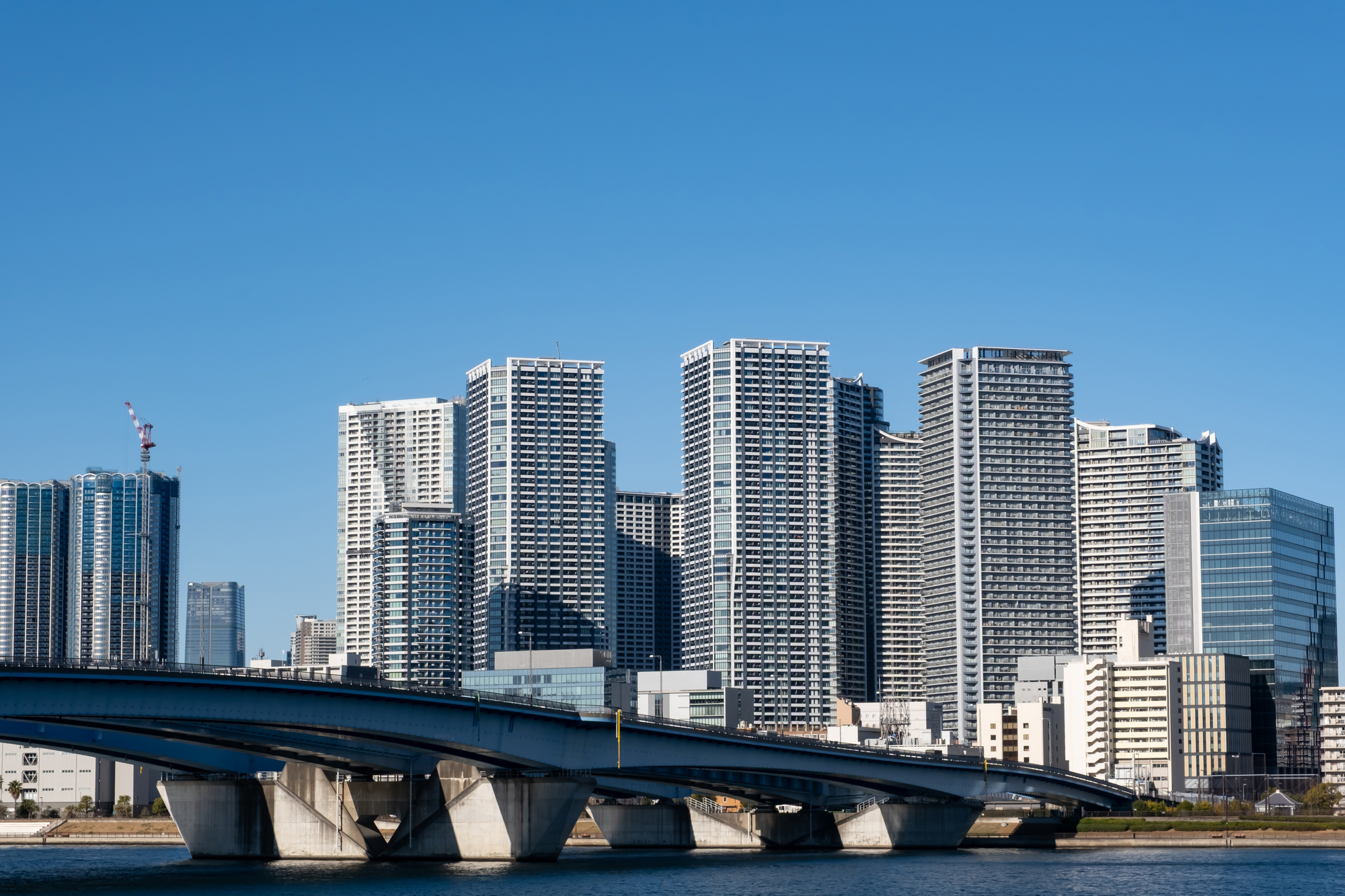
Reports of falling prices in Tokyo’s waterfront condominium market raise an obvious question for anyone considering a purchase in the capital: are sellers becoming more willing to negotiate? A Nikkei article published on October 16 reported that the average reduction between initial asking prices and completed sale prices in a waterfront sample had exceeded 10%.
That deserves attention, even if your search centres on Hiroo, Azabu, or Meguro. But interpreting the news requires looking beyond the headline. A reduction from an asking price, a change in average transaction prices, and a movement in estimated property values measure different things. Recent research also suggests that Tokyo’s market is moving at different speeds across locations and price brackets.
What the 10 percent figure measures
According to the Mansion Research figures cited by Nikkei, the waterfront sample’s average reduction from initial asking price to completed sale price reached 10.21% in August 2026. The corresponding figures were 8.70% for the central five wards and 6.48% for the other 18 wards. The waterfront sample includes neighbourhoods within the ward groupings, so these are overlapping geographic comparisons.
For a simple hypothetical example, an apartment initially advertised at ¥100 million and eventually sold for ¥90 million has undergone a 10% reduction. That calculation does not establish whether its value fell during the selling period. The original price may have been ambitious, market conditions may have changed, or both may have contributed.
It also includes reductions made while the property was being marketed. Buyers should therefore avoid treating the average as a discount they can automatically request from today’s advertised price. A seller may already have adjusted the listing substantially.
Why sellers are reconsidering their prices
The Nikkei report describes longer selling periods and competition among waterfront apartments with similar ages and layouts. When buyers have several comparable homes to consider, sellers face pressure to explain why their property deserves its asking price. Higher borrowing costs and already elevated purchase prices can further constrain what buyers are prepared to pay.
Mansion Research’s earlier August analysis also discusses price competition and inventory in Chuo and Koto wards. Its research collected publicly available listing information through June 2026. It is useful background from the company behind the waterfront research, although it is not a separate confirmation of Nikkei’s later August figures. [1]
For a buyer, slower sales can create time to compare alternatives and examine a property carefully. Whether that leads to a lower agreed price depends on the individual listing, its competition, and the seller’s position. A market average cannot tell you how flexible a particular owner will be.
Tokyo is showing different patterns
An October 13 report from MFS provides a more recent perspective. Its CAPS valuation service estimated that prices for a sample of 45 waterfront towers fell 3.6% between January and September 2026. That analysis concerned three-bedroom apartments standardised to 70 square metres across five waterfront districts. [2]
In the same report, the broader Tokyo 23-ward series remained 11.8% above a year earlier. A separate breakdown by price bracket showed little growth or modest declines above ¥200 million between January and September. These are AI-based estimates rather than completed transaction prices, and their periods and samples differ from Nikkei’s asking-to-sale comparison. They support examining location and budget separately; they do not establish a universal discount. [2]
Tokyo Kantei’s September 1 report offers additional context from the first half of 2026. Its standardised resale condo measure rose 8.3% across Tokyo’s 23 wards compared with the previous half-year, while Minato was the only ward to record a decline. The measure controls for selected property characteristics and differs from both a raw transaction average and CAPS estimates. It also predates the latest monthly evidence. [3]
The differences across these reports make location and budget essential to interpreting the news. Buyers searching in Hiroo, Azabu, or Meguro need evidence for the buildings and price bracket they are considering.
What a lower average sale price can tell you
Nikkei separately reports that the waterfront sample’s average completed-sale price declined from ¥144.84 million in December 2025 to ¥122.73 million in August 2026. This describes the average price of the apartments sold in each month. It is a different calculation from the 10.21% asking-to-sale reduction.
The mix of transactions also affects the average. A month with more smaller or older apartments can produce a lower figure without an equivalent decline in each property’s value. Comparing similar homes over time helps distinguish changes in the properties sold from changes in pricing.
What this means for buyers
The waterfront news gives buyers a timely reason to revisit sellers’ expectations. Where similar homes are competing and taking longer to sell, a well-supported offer can open a productive negotiation. A seller who has already adjusted the price may have less room to move.
East Japan REINS publishes completed-sale, new-listing, and inventory statistics that help place local activity in context. [4] At Tokyo Portfolio, we can help relate that wider evidence to the properties on your shortlist and the terms of an offer.
Before making an offer, focus on three practical checks:
- Recent comparable sales: Ask for completed transactions in the same building or nearby, allowing for differences in size, floor, condition, and sale date.
- Listing and price-change history: Review the original asking price, subsequent reductions, and time on the market to understand how the seller has responded to demand.
- Competing units in the target area: Compare the apartment with similar homes currently available and assess what justifies any price premium.
Sources
Lead source: Nikkei, October 16 2026, Tokyo waterfront resale condo price report, supplied screenshots. Waterfront statistics above are attributed to that report.
1 Mansion Research waterfront market analysis published August 11 2026
2 MFS CAPS October 2026 report published October 13 2026
3 Tokyo Kantei first half 2026 resale condo report published September 1 2026
4 East Japan REINS market statistics