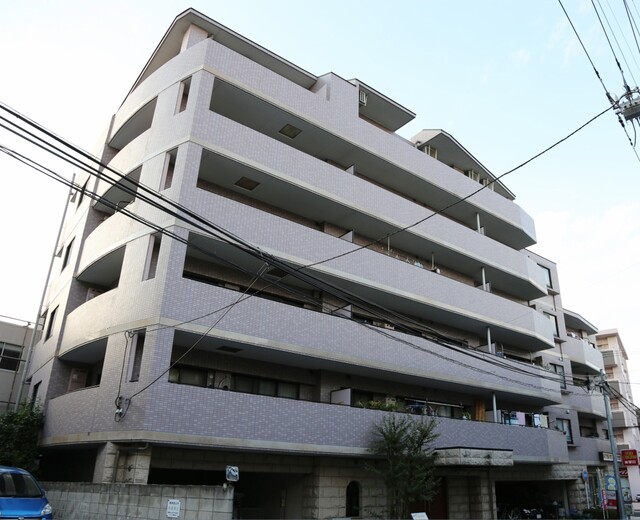
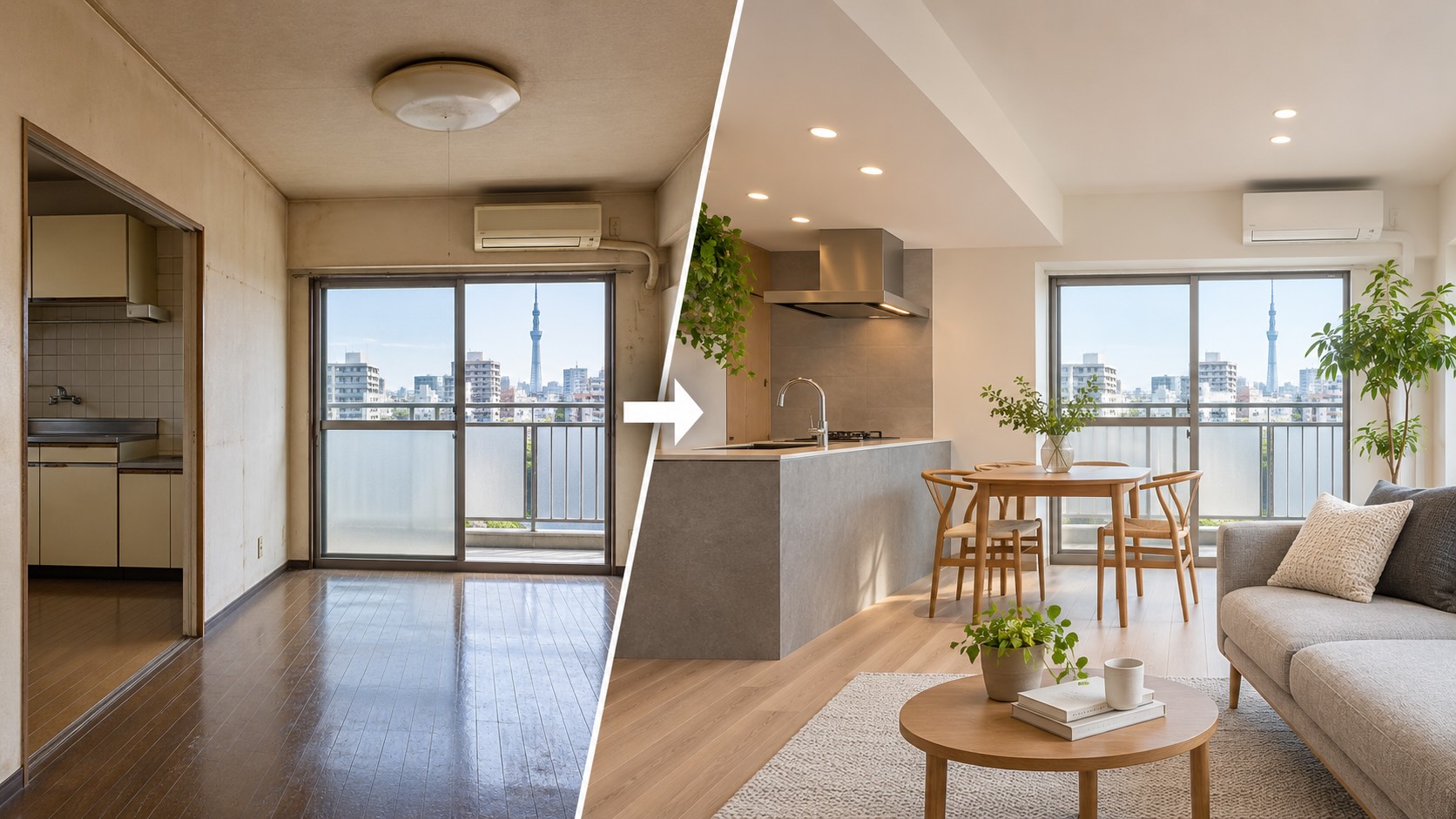
If you’re buying an older apartment in Tokyo, you may find a property in a great location with the right amount of space, but a layout or interior that needs work. You might want to remove a wall, replace the kitchen, or install new flooring before moving in.
However, owning an apartment in Japan doesn’t mean you can renovate every part of it. Condominium buildings have rules about what owners can change, and some renovations require approval from the building’s management association.
The cost of renovation also varies depending on the apartment’s size, age, condition, and the extent of the work. A simple interior update may cost a few million yen, while a complete renovation of an older Tokyo apartment can cost ¥10 million or more.
In this guide, we’ll explain what you can and cannot renovate in a Tokyo apartment, the rules and approvals you need to know about, typical renovation costs, and what to check before buying an apartment you plan to renovate.
What Can You Renovate in a Tokyo Apartment?
In most condominium buildings in Tokyo, you can renovate the privately owned portion of your apartment, known as the senyu-bu (専有部分).
This generally includes interior finishes, nonstructural partition walls, and fixtures such as kitchens, bathrooms, and toilets.
However, structural components and shared areas of the building, known as kyoyu-bu (共用部分), cannot be altered at an individual owner’s discretion.
These typically include concrete structural walls, columns, shared plumbing shafts, exterior windows, entrance doors, and balconies.
Here are some common apartment renovations and the restrictions you should know about:
- Removing or moving walls: You can generally remove or reposition nonstructural partition walls to change your apartment’s layout. However, you cannot remove load-bearing concrete walls as part of an individual unit renovation. This can be particularly restrictive in older buildings that use structural walls rather than columns and beams to support the building.
- Kitchen and bathroom renovations: You can usually replace existing kitchens, toilets, sinks, and bathroom fixtures. Moving them to a different location may be more difficult because drainage pipes need sufficient space and slope beneath the floor. Shared plumbing connections can also limit how far you can relocate these facilities.
- Replacing flooring: You can generally replace carpets, tiles, or wooden flooring, but many condominium buildings have soundproofing requirements. For example, replacing carpet with hardwood flooring may require materials that meet the building’s specified sound-insulation standards.
- Interior finishes and storage: Painting walls, replacing wallpaper, installing cabinets, and adding built-in storage are generally permitted. More extensive work involving electrical wiring or alterations to walls and ceilings may require additional checks.
- Windows, entrance doors, and balconies: These are generally classified as common property, even though you use them as part of your apartment. You typically cannot replace exterior window frames, change the entrance door, or enclose a balcony without the necessary building-wide authorization.
For example, if you’re buying an older apartment with a closed kitchen and want to create an open-plan living area, you’ll need to confirm whether the separating wall can be removed and whether the kitchen’s plumbing and ventilation can accommodate your proposed layout.
Even renovations entirely within your apartment may be subject to building-specific restrictions. Before making plans or hiring a contractor, you should review the condominium’s management regulations and confirm which changes are allowed.
Apartment Renovation Rules and Approval Requirements in Tokyo
Before starting renovation work, check your building’s management regulations (kanri kiyaku) and confirm whether approval from the management association (kanri kumiai) is required.
Japan’s standard condominium management regulations provide a framework for approving renovations that could affect common areas or neighboring apartments.
However, each condominium has its own rules, so the approval process can vary from one building to another.
Getting Approval From the Management Association
For renovations that require approval, you’ll generally need to submit an application to the building’s management association before construction begins.
Depending on the work and the building’s requirements, you may need to provide:
- Renovation application: Details of the apartment, property owner, proposed work, and planned construction dates.
- Floor plans and drawings: Documents showing the existing layout and proposed changes, particularly if you’re removing walls or relocating fixtures.
- Material specifications: Details of flooring, plumbing, waterproofing, and other materials that may affect neighboring units or common areas.
- Contractor information: The renovation company’s name, contact details, and the person responsible for supervising the project.
- Construction schedule: Expected start and completion dates, along with the types of work being carried out.
Some buildings only require advance notification for minor renovations, while others require written approval from the management association’s board.
The submission deadline also varies. Some buildings accept notifications shortly before construction, while others require applications at least a month in advance to allow time for review.
Confirm the approval requirements before finalizing your renovation schedule or committing to a contractor.
Construction Hours and Building Restrictions
Even after your renovation is approved, contractors must follow the building’s construction rules.
These may include restrictions on:
- Working hours: Renovation work may be limited to certain daytime hours, with noisy construction prohibited during evenings, weekends, or public holidays.
- Noise and vibration: Demolition, drilling, and flooring replacement may be subject to additional restrictions.
- Common areas: Contractors may need to protect elevators, hallways, and entrances when transporting materials and equipment.
- Waste disposal: Construction debris must be removed according to the building’s requirements, not disposed of with ordinary household waste.
- Neighbor notifications: Some buildings require advance notice to neighboring apartments before noisy renovation work begins.
Failure to follow these rules can lead to complaints, construction delays, or requests to stop work until the issue is resolved.
Building Permitd
Most routine interior renovations, such as replacing wallpaper, updating kitchen fixtures, or installing new cabinets, do not require a separate government building-confirmation application.
However, more extensive work affecting major structural components or building safety may require additional approvals under Japan’s Building Standards Act.
Renovation contractors must also comply with asbestos regulations. For work involving existing building materials, a pre-renovation asbestos survey is generally required. If the renovation contract is worth ¥1 million or more, including tax, the contractor must also report the survey results to the relevant authorities, even if no asbestos is found.
Before beginning major renovation work, ask your contractor or architect to confirm which legal requirements apply. Approval from the condominium’s management association does not replace any government approvals or inspections required by law.
How Much Does It Cost to Renovate an Apartment in Tokyo?
Apartment renovation costs in Tokyo can range from a few hundred thousand yen for minor improvements to ¥10–20 million or more for a complete renovation.
The total cost depends on the apartment’s size, the condition of its existing plumbing and electrical systems, the materials you choose, and whether you’re changing the layout or keeping the existing one.
For example, replacing an old kitchen and bathroom without changing their locations will generally cost less than moving both to create an open-plan living area.
Full Apartment Renovation Costs by Size
A full condominium renovation in the greater Tokyo metropolitan area typically costs around ¥150,000–¥200,000 per square meter.
Here’s what that works out to for different apartment sizes:
| Apartment size | Estimated renovation cost |
|---|---|
| 60 m² | ¥9–12 million |
| 70 m² | ¥10.5–14 million |
| 80 m² | ¥12–16 million |
These estimates include construction and design supervision costs but exclude consumption tax. Actual costs depend on the renovation scope and materials.
A full renovation typically involves replacing interior finishes, updating kitchens and bathrooms, and potentially changing the layout, plumbing, or electrical wiring.
If you’re planning a high-end renovation with custom cabinetry, premium materials, imported fixtures, or extensive layout changes, the cost can be considerably higher.
Typical Costs for Individual Apartment Renovations
If the apartment’s layout and major systems are still in good condition, you may only need to renovate certain rooms or replace outdated fixtures.
Based on 2026 estimates, here are some typical costs for individual renovation projects:
| Renovation project | Estimated cost |
|---|---|
| Kitchen renovation | ¥800,000–1.5 million |
| Bathroom renovation | ¥800,000–1.2 million |
| Toilet renovation | ¥300,000–400,000 |
| Washroom renovation | ¥300,000–500,000 |
| Kitchen, bathroom, toilet, and washroom combined | ¥2.5–3 million |
| Wallpaper and flooring replacement | ¥1.5–2 million |
| Layout changes or relocation of plumbing fixtures | ¥1–2 million |
These are indicative project estimates, not fixed prices. The scope and size of each project affect the total, and some categories overlap.
You can often reduce the cost by keeping the existing kitchen and bathroom locations, retaining usable fixtures, and choosing standard materials rather than custom finishes.
However, the condition of an older apartment can change the scope of the work. For example, replacing a bathroom may reveal deteriorated pipes or waterproofing that also need repairs.
Additional Costs to Include in Your Renovation Budget
Beyond the quoted construction cost, you should account for other expenses that may arise during the project.
These can include:
- Design and architectural fees: Some contractors include design services in their quotations, while others charge separately for architectural plans and project supervision.
- Demolition and waste disposal: Removing old flooring, partition walls, cabinetry, and bathroom fixtures can add to the overall cost.
- Unexpected repairs: Older apartments may have deteriorated pipes, damaged subfloors, or outdated electrical systems that need attention once renovation work begins.
- Building-related expenses: Depending on the condominium’s rules, you may need to pay for common-area protection, elevator protection, or other construction-related arrangements.
- Temporary accommodation: If you’re already living in the apartment, you may need somewhere else to stay during extensive renovation work.
We recommend allowing an additional 10–15% of your estimated renovation budget for unexpected expenses, particularly when renovating an older property.
For example, if you’re buying a 70 m² apartment and planning a full renovation costing ¥12 million before tax, a 15% contingency would add ¥1.8 million to your budget. You would also need to account for consumption tax and any expenses not included in the contractor’s quotation.
Before committing to the renovation, get detailed quotations from multiple contractors and compare what each includes. A lower quotation may exclude demolition, electrical upgrades, or other work that you’ll eventually need to pay for.
How to Renovate an Apartment in Tokyo
Once you’ve confirmed what renovations your building allows, the next step is to find a contractor, finalize your plans, and arrange the necessary approvals.
For a full apartment renovation, the entire process can take around four to seven months, including planning, design, approvals, and construction. Smaller projects, such as replacing a kitchen or updating flooring, generally take less time.
Here’s how the renovation process typically works in Tokyo.
1. Find a Renovation Contractor and Arrange an Inspection
Start by contacting renovation companies that have experience working with condominium buildings in Tokyo.
A contractor should inspect the apartment before providing a detailed quotation. During the inspection, they can assess the existing layout, plumbing, electrical systems, and any structural restrictions that could affect your plans.
If you’re purchasing an older apartment specifically to renovate, it’s worth arranging this inspection before committing to the property whenever possible.
2. Finalize Your Renovation Plans and Get Quotations
Once the contractor has inspected the apartment, you can discuss the proposed layout, materials, fixtures, and other changes.
We recommend getting detailed quotations from at least two or three contractors so you can compare the scope of work and costs.
Make sure each quotation specifies what’s included, particularly demolition, plumbing, electrical work, materials, waste disposal, and project supervision.
Before signing a contract, confirm the payment schedule, estimated completion date, and how additional costs will be handled if unexpected problems arise.
3. Apply for Renovation Approval
After finalizing the plans, your contractor can help prepare the documents required by the condominium’s management association.
These may include drawings, material specifications, contractor information, and the proposed construction schedule.
Don’t schedule construction to begin until you’ve obtained the necessary approvals. Your contractor should also arrange any required notifications to neighboring apartments and coordinate access to elevators and other shared facilities.
4. Complete the Renovation Work
Construction generally begins with demolition and removal of existing fixtures, followed by plumbing, electrical, and structural preparation work where permitted.
Contractors then install the new fixtures, flooring, walls, cabinetry, and interior finishes.
For a full apartment renovation, construction alone can take approximately two to four months, depending on the scope of work.
You should receive regular progress updates from your contractor. If demolition reveals problems such as deteriorated pipes or damaged subfloors, ask for a written estimate and an explanation of any schedule changes before approving additional work.
5. Inspect the Apartment Before Handover
Once construction is complete, walk through the apartment with your contractor and check that the work matches the agreed plans.
Pay particular attention to:
- Kitchen and bathroom fixtures, including water pressure, drainage, and leaks.
- Electrical outlets, switches, lighting, and ventilation.
- Flooring, walls, doors, cabinetry, and other finishes.
- Any incomplete work, visible damage, or differences from the agreed specifications.
Document any problems and agree on how and when the contractor will fix them.
You should also receive relevant warranties, equipment manuals, and documentation for completed work. Keep these records, as they may be useful for future repairs or when selling the apartment.
What to Check Before Buying an Apartment You Plan to Renovate
If you’re planning to renovate an apartment after buying it, we recommend checking whether your proposed changes are possible before making an offer.
Some restrictions won’t be obvious during a property viewing. You may find an apartment with an attractive asking price, only to discover that you can’t remove a particular wall, relocate the kitchen, or install the flooring you want.
Here are a few things to check before purchasing an older apartment in Tokyo.
- Building management regulations: Ask your real estate agent for the condominium’s management bylaws and renovation guidelines. Check whether your planned changes are permitted, what approvals you’ll need, and whether there are restrictions on flooring materials or construction work.
- Structural plans and layout restrictions: Request available building plans and have a renovation contractor assess whether your proposed layout is feasible. In particular, confirm which walls are structural and whether the plumbing and drainage systems can accommodate any changes to the kitchen or bathroom.
- Condition of the apartment: Older apartments may have outdated electrical wiring, deteriorated plumbing, water damage, or other problems that aren’t immediately visible. Consider arranging a professional inspection before purchasing, particularly if you’re planning extensive renovations.
- Building maintenance and repair history: Review the condominium’s long-term repair plan, recent major repairs, and the balance of its repair reserve fund. An apartment may be suitable for renovation, but an aging building with insufficient reserves could face expensive repairs and higher monthly contributions. You can learn more about these expenses in our guide to kanri-hi and shuzen-tsumitatekin.
- Renovation budget and timeline: If possible, arrange for a contractor to inspect the apartment and provide a preliminary estimate before you purchase it. Account for renovation costs, consumption tax, unexpected repairs, and the time needed to obtain building approval.
You should also consider whether the total cost of buying and renovating the property makes financial sense compared with purchasing an apartment that’s already been renovated.
For example, an older apartment priced at ¥60 million may initially seem more attractive than a renovated property priced at ¥75 million. However, if the older apartment requires ¥12 million in renovation work, plus taxes, purchase expenses, and other costs, the difference may be smaller than expected.
A renovated interior also doesn’t address problems with the building itself. Before purchasing, make sure you’re comfortable with both the apartment’s condition and the condominium’s long-term maintenance.
Looking to Buy an Apartment in Tokyo?
Buying an older apartment and renovating it can be a good way to find a property in your preferred location while customizing the layout and interior to your needs.
However, it’s important to understand the building’s renovation restrictions and the total cost before committing to a purchase.
At Tokyo Portfolio, we help international buyers find apartments in Tokyo, including older properties with renovation potential.
Our team can help you evaluate available properties, review relevant building information, and understand what to consider before making an offer.
If you’re planning to buy an apartment in Tokyo, contact our team to discuss your requirements and explore available properties.