
Most people expect a typical Tokyo apartment to be tiny. This isn’t really accurate, and the perception mostly comes from social media and viral YouTube tours that focus on the most extreme micro-apartments, which represent only a very small fraction of the actual housing market.
The average Tokyo apartment is smaller than what most Westerners are used to, but the space is designed to be far more functional than its size suggests.
That said, Tokyo’s apartment market works differently from what most foreigners are used to. The majority of the listings you’ll find use layout codes like 1K, 1DK, and 1LDK that look almost identical but represent meaningful differences in livable space and monthly rent.
The construction type of a building also affects everything from soundproofing to earthquake safety in ways that rarely come up in Western apartment searches. Many units also come with amenities and conveniences that most Westerners wouldn’t expect, such as automated baths, camera intercoms, and prefabricated bathrooms, which are standard across the city.
This guide walks through what a typical Tokyo apartment actually looks like, how the layout and sizing system works, what standard features come with most units, and what you should expect to pay across different wards in Tokyo. We also cover building construction types, how Tokyo compares to other major cities on a cost-per-square-meter basis, and practical timing advice for your apartment search.
Typical Tokyo Apartment Sizes
Over half of all households in Tokyo are single-person households, and the average household size across the city is just 1.84 people. This is the main reason compact layouts like the 1R and 1K dominate the rental market, and it shapes what “typical” actually looks like depending on who you are and how you plan to live.
Tokyo apartments are categorized using a layout code system that combines a number (the number of separate rooms) with letters indicating kitchen and living space. The most common types range from 1R (a single open room) to 3LDK (three bedrooms plus a combined living, dining, and kitchen area).
The 1K is the single most common layout in Tokyo’s rental market, and it’s where most foreign renters start. But the right layout for you depends entirely on your household size, budget, and how much time you spend at home.
Here’s what each type actually looks like:
1R and 1K Apartments (13–25 m²)
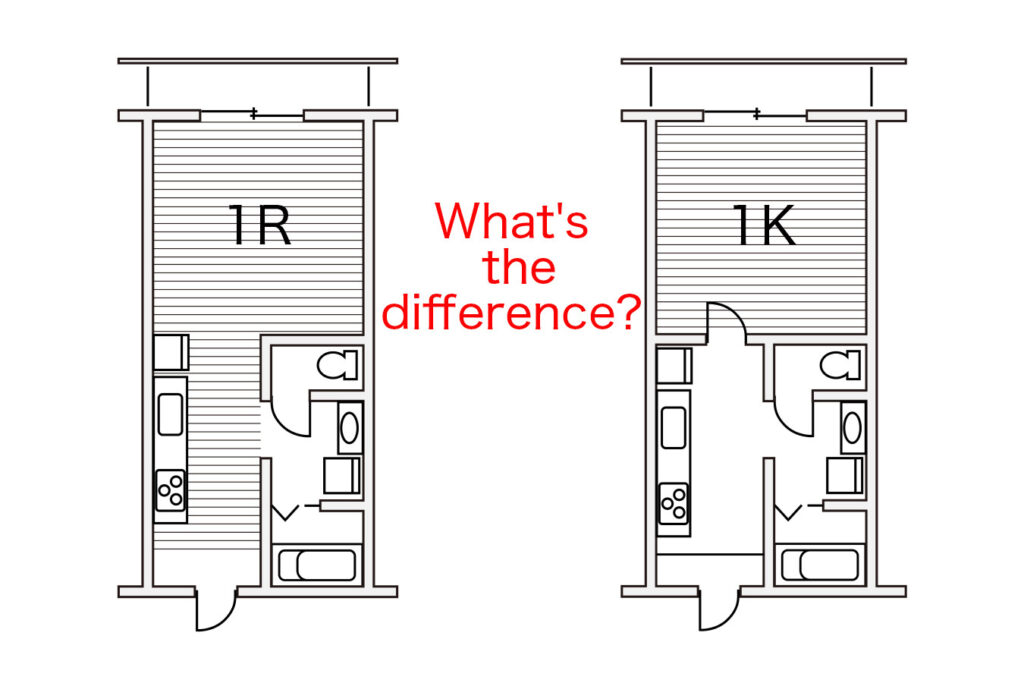
These are Tokyo’s single-occupancy apartments, and they make up the bulk of available rental listings across the city.
A 1R (one room) is a true studio, with the kitchen, sleeping area, and living space all in a single open room with no dividing walls. Only the bathroom is separated. These units typically range from about 13 to 20 square meters. They work well for short-term stays or renters who spend most of their time outside the apartment, but the lack of separation means cooking smells spread through the entire space, which can be a daily annoyance.
A 1K (one room plus kitchen) is a significant step up in livability despite looking similar on paper. The key difference is that the kitchen is separated from the main living space by a wall or hallway, which keeps food odors and cooking noise contained. A standard 1K runs about 20 to 25 square meters, and this is the layout most foreign professionals and English teachers end up renting when they first move to Tokyo.
The first thing you notice when walking into a typical 1K is the genkan, a small recessed entryway where you remove your shoes before stepping up into the apartment. There’s usually a compact shoe cabinet built into the wall beside it. From the genkan, a short hallway leads past the bathroom on one side and the kitchen on the other, then opens into the main room.
The bathroom in most 1K apartments is a unit bath, a single prefabricated pod containing the bathtub, shower, and sink in a compact enclosure. In higher-end or slightly larger units, the toilet is separated into its own small room. Japanese listings mark this as “BT別” (bath and toilet separate), and it’s one of the most sought-after features among renters. It’s worth filtering for when you start your search.
The kitchen area is narrow but functional. You’ll typically get a two-burner IH or gas stove, a small sink, and a strip of counter space. Full-sized ovens and dishwashers are rare in standard Tokyo apartments. Most residents rely on countertop toaster ovens and compact microwaves instead. There’s usually space under the counter for a mini fridge, though some units include one.
The main room serves as a bedroom, a living room, and a workspace all in one. A typical main room measures about 6 to 8 jo (roughly 10 to 13 square meters), and most residents furnish it with a low bed or futon, a small table, and a compact storage unit. Built-in closets are common, ranging from shallow shelved closets to deeper oshiire-style storage originally designed for folding and storing futons.
Almost every unit has a small balcony off the main room. Balconies serve a very practical purpose in Tokyo, as most residents dry their laundry outside on extendable poles rather than use a dryer. Wall-mounted air conditioning units come pre-installed, typically one per room. Central air conditioning is not standard in Japanese apartments.
1DK and 1LDK Apartments (25–50 m²)
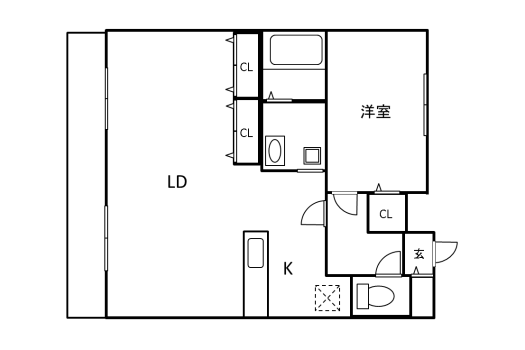
The jump from a 1K to a 1DK or 1LDK is where daily comfort starts to feel noticeably different.
A 1DK (one room plus dining kitchen) gives you a kitchen area large enough for a small dining table, so eating and cooking happen in a separate space from your main room. These apartments typically range from 25 to 35 square meters and are often found in slightly older buildings. They are a solid option for single renters who cook regularly or need a bit more breathing room than a 1K provides.
A 1LDK (one room plus living, dining, and kitchen) is widely considered the most flexible apartment type in Tokyo. It includes a fully separate bedroom and a combined living, dining, and kitchen space, creating a clear boundary between where you sleep and where you spend your waking hours.
These units range from 35 to 50 square meters and are the standard choice for couples and remote workers who need functional separation between rest and daily activity.
The core features remain the same as in 1K. You’ll still find the genkan, unit bath (or separated bath and toilet), wall-mounted AC, balcony with laundry poles, and built-in closets. The difference is that the additional square meters go toward a dedicated space for eating, relaxing, or working that doesn’t double as your bedroom. For many renters, especially those working from home, this separation makes a meaningful difference in day-to-day quality of life.
Monthly rent for a 1DK typically ranges from ¥95,000 to ¥145,000, depending on the ward and building age. A 1LDK runs between ¥140,000 and ¥230,000 in most areas, with central wards like Minato and Shibuya pushing well above that range.
2LDK and 3LDK Apartments (50–90 m²)
These are Tokyo’s family-sized apartments, representing a very different segment of the market.
A 2LDK (two rooms plus living, dining, and kitchen) typically ranges from 50 to 70 square meters and is the standard layout for couples with a child, roommates, or professionals who want a dedicated home office. The two separate rooms provide a clear bedroom and a second room that can serve as a children’s room, guest room, or workspace. The shared LDK space is large enough for a full dining table and a small living area with a sofa.
A 3LDK (three rooms plus living, dining, and kitchen) is Tokyo’s version of a family home. These apartments range from 70 to 90 square meters and offer three private rooms alongside the shared living space. They are most common in residential wards like Setagaya, Nerima, and Edogawa, and they become harder to find in central Tokyo, where land costs push developers toward smaller unit counts.
The same core features carry through at this size. Every room will have its own wall-mounted AC unit, the genkan gets a bit larger with more shoe storage, and the kitchen is typically upgraded to a three-burner stove with more counter space.
Some 2LDK and 3LDK apartments in newer buildings include features that are rare in smaller units, such as built-in dishwashers, larger bathtubs, and separate laundry rooms. Balconies also tend to be wider, often running the length of the living room and one bedroom.
Rent for a 2LDK ranges from roughly ¥180,000 to ¥350,000 per month, while 3LDK apartments typically start around ¥250,000 and can reach ¥450,000 or more in popular family neighborhoods. These units move more slowly on the market than 1K or 1LDK apartments, but landlords can be more selective about tenant profiles, and applications from single renters for these larger layouts are sometimes rejected.
How Japanese Apartments Measure Space
If you’ve ever looked at a Tokyo apartment listing and seen a room described as “6帖” or “6 jo,” that’s the traditional Japanese unit of measurement based on the size of a single tatami mat.
One jo equals approximately 1.62 square meters or about 17.4 square feet, and it remains the standard way rooms are measured across Japan, even in apartments that don’t have tatami flooring.
This system can be confusing at first because it’s used alongside square meters in most listings. The total apartment size is usually given in square meters (for example, 25 m²), but individual rooms within the apartment are described in jo.
So a listing might say “1K, 25 m², main room 7 jo,” which tells you the apartment is 25 square meters total and the main living space is roughly 11.3 square meters. The remaining space is divided between the kitchen, hallway, bathroom, and genkan.
There’s another measurement you’ll occasionally see on Japanese real estate listings called tsubo, which is more commonly used for land and larger properties than for apartments. One tsubo equals approximately 3.31 square meters, or about 35.6 square feet, which is roughly the area of two tatami mats. Most renters won’t need to worry about tsubo, but it’s worth knowing if you’re comparing apartments to houses or looking at property sizes in suburban areas.
The more important thing to understand is the difference between total floor area and actual living space. A listing that says 25 m² does not mean you get 25 square meters of usable room. A significant portion of that total goes to the hallway, bathroom, kitchen, genkan, and closet space. In a typical 1K apartment listed at 25 m², the main living room might be only 12 to 13 m².
The average Tokyo dwelling has about 66 square meters of total floor area, but only about 41 square meters of usable living space. This gap often catches first-time renters off guard, so it’s worth keeping in mind when you’re comparing listings and deciding what size apartment you actually need.
Features You’ll Find in Almost Every Tokyo Apartment
Some of the features mentioned in the previous section warrant closer examination because they work differently from what most Westerners are used to. Others are easy to overlook on a listing, but make a real difference in daily life.
This section covers the standard amenities and built-in features that come with the vast majority of Tokyo apartments, regardless of size or price tier.
The Genkan
The genkan is more than just a doormat area. It’s a recessed entryway that sits a few inches lower than the rest of the apartment floor, creating a physical boundary between the outside and the inside.
You remove your shoes here before stepping up into the apartment, and this is a strict cultural norm rather than a personal preference. Virtually every Japanese apartment has one, and most include a built-in shoe cabinet called a getabako or kutsubako that can hold from 4 to 12 pairs, depending on the unit. In a larger apartment, the genkan may also have a small closet for coats and umbrellas.
The Unit Bath and Bathroom Setup
The bathroom in a typical Tokyo apartment is unlike anything in Western housing. Most standard apartments have a unit bath, a single prefabricated module installed as a single sealed piece during construction.
The walls, floor, tub, and fixtures are part of a single waterproof unit, meaning the entire room functions as a wet area. You wash and rinse yourself outside the tub on a small stool using a detachable showerhead, and then soak in the tub afterward. The bath water stays clean this way because you only enter the tub after you’ve washed, and many households reuse the same water for multiple family members.
Most apartments built in the last 15 to 20 years include an automated bath control panel, usually mounted on the kitchen wall. You press a button, and the system fills the tub to a preset water level and temperature, and it can reheat the water later if it cools down. This is standard equipment in Tokyo, not a luxury add-on.
The toilet situation varies by apartment. In smaller 1R and budget 1K units, the toilet is often inside the unit bath alongside the sink and bathtub, which is called a “3-point unit bath.” In most 1K apartments and nearly all larger layouts, the toilet is in its own separate room.
This is the “BT別” distinction mentioned earlier, and it’s one of the first filters experienced renters apply when searching. Japanese toilets are well known for their heated seats, bidet functions, and control panels, and even in basic apartments, washlet-equipped toilets are common.
The Kitchen
Tokyo apartment kitchens are designed for efficiency rather than space. A standard 1K kitchen has a two-burner stove (either induction or gas), a single-basin sink, and just enough counter space for basic food prep.
Full-sized ovens are almost nonexistent in standard apartments because Japanese cooking traditionally relies on stovetop methods, grilling, and rice cookers rather than baking. Most residents use countertop toaster ovens or combination microwave-convection units for anything that requires an oven.
Dishwashers are similarly uncommon in apartments below the 2LDK level, though newer buildings are starting to include compact built-in models. Refrigerator space under the counter is standard, but the fridge itself is rarely included with the apartment. Most renters buy their own, and the available space usually accommodates a slim model between 140 and 270 liters rather than a full-sized Western refrigerator.
One feature that often surprises foreign renters is the lack of a kitchen ventilation hood in smaller units. Some 1R and budget 1K apartments rely on a small exhaust fan above the stove rather than a proper range hood, which is another reason the 1K layout with its separated kitchen is preferable to the open-plan 1R for anyone who cooks regularly.
Laundry and Balcony Setup
Tokyo apartments do not come with dryers. A designated hookup for a washing machine is standard, usually located in the hallway, bathroom, or on the balcony itself, and most renters buy their own machine.
The balcony is where laundry drying happens. Extendable metal poles mounted on brackets above the balcony railing hold hangers, and you’ll see laundry hanging outside across every residential neighborhood in Tokyo on any given day. Some newer apartments include a bathroom drying function called “浴室乾燥機” (bathroom dryer), which lets you hang clothes on a rack inside the bathroom and run a heated fan. This is especially useful during the rainy season in June and July when outdoor drying isn’t practical.
Climate Control
Every room in a Tokyo apartment has its own wall-mounted air conditioning unit, which handles both cooling and heating. These units are pre-installed and serve as the primary source of year-round climate control, as central heating and air conditioning systems are not standard in Japanese apartments.
This room-by-room approach means you only heat or cool the spaces you’re actually using, which keeps electricity costs lower, but it also means hallways and bathrooms can get noticeably cold in winter.
Many apartments also lack insulation by Western standards, particularly older wooden (mokuzou) buildings. The combination of single-room AC units and thin walls means summers can feel humid even with the air conditioning running, and winters require layering up when you leave the main room. This is one of the practical trade-offs of Tokyo apartment living that listings don’t mention.
Security and Entry Systems
Auto-lock entry systems are standard in most apartment buildings built within the last two decades. Visitors use an intercom panel at the building entrance, and you can see and speak to them on a small video monitor inside your apartment before buzzing them in.
The apartment’s front door typically has a separate deadbolt and chain lock. This system is common enough that apartments without auto-lock are considered a downgrade, and it’s another feature worth filtering for during your search.
Some buildings also have a delivery box system in the lobby called a takuhai box, where delivery drivers can leave packages in a secure locker when you’re not home. Given how frequently Japanese residents use home delivery services, this is a genuinely useful feature that’s easy to overlook when comparing listings.
Cost to Rent an Apartment Across Tokyo’s 23 Wards
Rent in Tokyo varies dramatically depending on where you live. The difference between the most expensive ward and the cheapest can be as much as 3.3 times for the same layout type, meaning your choice of neighborhood has a greater impact on monthly costs than almost any other factor.
The table below shows the average monthly rent for 1K and 1LDK units across 10 representative wards, grouped by price tier. These figures are based on 2025 listing data from major Japanese real estate platforms and exclude utilities and maintenance fees.
| Ward | Tier | Avg. 1K Rent | Avg. 1LDK Rent | Known For |
|---|---|---|---|---|
| Minato | Premium | ¥136,000 | ¥322,000 | Embassies, expat community, Roppongi |
| Chiyoda | Premium | ¥101,000 | ¥293,000 | Government district, Tokyo Station |
| Shibuya | Premium | ¥93,000 | ¥227,000 | Nightlife, startups, young professionals |
| Shinjuku | Mid-high | ¥71,000 | ¥144,000 | Most foreign residents, transit hub |
| Meguro | Mid-high | ¥72,000 | ¥200,000 | Quiet residential, stylish neighborhoods |
| Nakano | Mid-range | ¥75,000 | ¥130,000 | Affordable central location, subculture |
| Setagaya | Mid-range | ¥80,000 | ¥155,000 | Family-friendly, parks, residential |
| Itabashi | Affordable | ¥56,000 | ¥96,000 | Budget-friendly, good transit access |
| Adachi | Affordable | ¥62,000 | ¥81,000 | Lowest rents, improving infrastructure |
| Katsushika | Affordable | ¥55,000 | ¥75,000 | Cheapest ward, borders Chiba/Saitama |
The central wards of Minato, Chiyoda, and Shibuya consistently rank as the most expensive areas in the city. A standard 1K apartment in Minato-ku averages over ¥130,000 per month, and 1LDK units in the same ward regularly exceed ¥300,000. These wards are home to Tokyo’s major business districts, embassies, and nightlife areas, and the high concentration of corporate-sponsored expat housing further pushes prices up.
On the other end of the spectrum, wards like Adachi, Katsushika, Itabashi, and Nerima offer significantly lower rents while still providing good transit access to central Tokyo. A 1K in Katsushika-ku can be found for around ¥55,000 per month, and even a 1LDK in these outer wards stays well under ¥100,000 in most cases. The trade-off is a longer commute, typically 30 to 45 minutes to major business hubs, but the savings are substantial enough that many renters find it worthwhile.
The middle tier is where most renters end up, balancing cost and convenience. Wards like Nakano, Suginami, Setagaya, and Toshima offer a mix of residential character and reasonable access to central Tokyo. Rent for a 1K in these wards typically falls between ¥70,000 and ¥85,000, and 1LDK units range from ¥120,000 to ¥160,000. These neighborhoods tend to have strong local shopping streets, quieter residential blocks, and a more settled community feel compared to the busier central wards.
Several factors beyond location affect what you’ll actually pay for a given apartment. The distance from the nearest train station is one of the biggest. An apartment within five minutes of a station on a major line can cost 10 to 20 percent more than a similar unit that’s a 15-minute walk away. Building age matters as well.
Apartments in buildings built within the last 10 years command higher rents than older stock, even when the older units offer more square meters for the same price. Floor level plays a role too, with higher floors generally priced above lower ones due to better light, views, and reduced street noise. Corner units with windows on two sides also carry a premium over interior units with a single window.
It’s important to keep in mind that the monthly rent figure on a listing is not your total monthly housing cost. Most apartments charge a separate monthly maintenance fee (kanrihi or kyoekihi) that covers shared building expenses, such as hallway cleaning, elevator maintenance, and garbage collection.
This fee typically adds ¥5,000 to ¥15,000 per month to your base rent. Utilities, including electricity, gas, water, and internet, are also separate and usually run between ¥10,000 and ¥20,000 per month for a single-person household, depending on the season and usage.
The upfront move-in costs in Tokyo deserve their own mention because they catch many first-time renters off guard. Between the security deposit (shikikin), key money (reikin), first month’s rent, agency fee, fire insurance, and guarantor company fee, you should expect to pay the equivalent of four to six months of rent before you move in.
Key money is a non-refundable payment to the landlord that has no Western equivalent, and while some landlords have started waiving it to attract tenants, it remains common in popular areas and newer buildings.
Building Types and Construction
Most guides about Tokyo apartments focus on layout codes and rent, but the construction type of the building you live in affects your daily comfort just as much as the number of rooms. Soundproofing, insulation, earthquake resistance, and overall build quality all depend on the building’s materials, and this is something many first-time renters in Tokyo overlook entirely.
Japanese apartment buildings fall into three main construction categories, and understanding the differences between them will save you from some of the most common complaints foreign renters have after moving in.
Wooden Construction (木造 / Mokuzou)
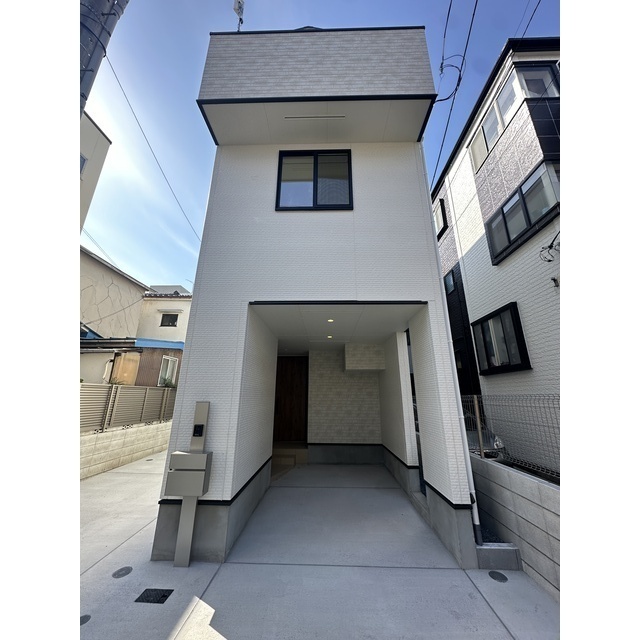
Wooden buildings are the most affordable option in Tokyo and account for a large share of the older rental stock, particularly in residential wards outside the city center. These are typically low-rise buildings of two to three floors, and they’re the type most commonly labeled as “apāto” (アパート) on Japanese listing sites.
The biggest drawback of wooden construction is its poor sound insulation. Walls and floors in mokuzou buildings are thin enough that you can hear your neighbors’ conversations, footsteps, and music with uncomfortable clarity. Insulation is also poor, which means summers feel hotter and winters feel colder than they would in a concrete building, even with the air conditioning running.
On the positive side, wooden apartments tend to offer more space for the money, and some renters prefer the older, more spacious layouts that these buildings provide.
Earthquake safety is a legitimate consideration with wooden buildings, but the risk depends heavily on when the building was constructed. Japan overhauled its seismic building codes in 1981 (known as the “new earthquake resistance standards” or 新耐震基準), and buildings constructed after that date are required to meet significantly higher structural standards.
Wooden buildings built before 1981 carry more risk, and many renters and real estate agents use this as a hard cutoff when filtering listings.
Reinforced Concrete (RC / 鉄筋コンクリート)
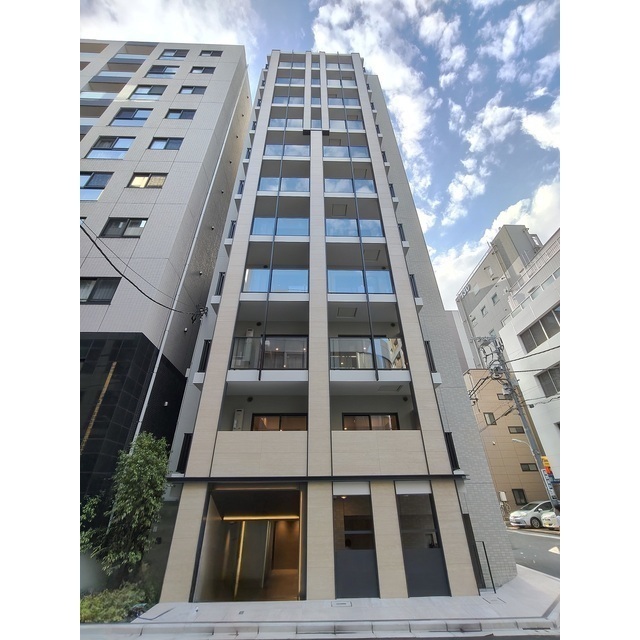
RC buildings represent the middle ground in Tokyo’s apartment market and are the most common construction type for mid-rise buildings of five to ten floors. These are typically labeled as “manshon” (マンション) on listing sites, which is the Japanese term for a concrete apartment building and has nothing to do with the English word “mansion.”
The jump in quality from wooden to RC construction is significant. Sound transfer is dramatically reduced, though not eliminated. You’re unlikely to hear normal conversation through the walls, but heavy footsteps or loud music from a direct neighbor can still be noticeable. Insulation is better as well, which means your air conditioning works more efficiently and your utility bills tend to be lower than in a comparable wooden apartment.
RC buildings generally cost 20 to 30 percent more in rent than wooden buildings of similar size and location, but many renters consider this a worthwhile trade-off for the improvement in soundproofing and climate control alone.
Steel Reinforced Concrete (SRC / 鉄骨鉄筋コンクリート)
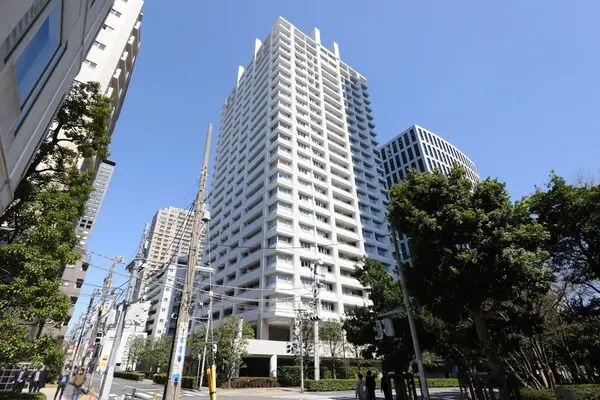
SRC construction is the highest standard you’ll find in Tokyo’s residential buildings. These are typically high-rise towers of 10 or more floors and offer the best soundproofing, insulation, and earthquake resistance available on the market. Most newer luxury apartment towers and large-scale residential developments use SRC construction.
The rent premium for SRC buildings is noticeable, typically 30 to 50 percent above wooden construction for a comparable layout and location. But the quality-of-life difference is substantial, particularly for renters who work from home or are sensitive to noise.
SRC buildings also tend to offer the most comprehensive shared amenities, including auto-lock entry, parcel lockers, security cameras, on-site management staff, and, in some cases, fitness rooms or rooftop terraces.
How to Check Construction Type on Listings
Every Japanese apartment listing includes the construction type, usually abbreviated as 木造 (wooden), RC (reinforced concrete), SRC (steel reinforced concrete), or occasionally S造/鉄骨造 (steel frame, which falls between wooden and RC in quality).
If you’re filtering listings and want a simple rule of thumb, prioritizing RC or SRC construction and buildings built after 1981 will eliminate most of the noise and insulation complaints that dominate foreigner housing forums. The rent difference is real, but so is the difference in how comfortable your apartment feels day to day.
How Tokyo Apartments Compare to New York, London, and Sydney
Tokyo has a reputation for small apartments, but that reputation is rarely put into context with other major cities. When you compare what your money actually gets you in Tokyo versus New York, London, or Sydney, the picture looks very different from what most people assume.
A 1K apartment in a mid-range Tokyo ward like Nakano or Suginami costs roughly ¥80,000 to ¥100,000 per month, which is about $530 to $670 USD at current exchange rates. For that price, you get 20 to 25 square meters of private space with a separate kitchen, your own bathroom, a balcony, pre-installed air conditioning, and an auto-lock entry system with video intercom. The apartment is almost certainly within a 10-minute walk of a train station that connects you to central Tokyo in under 30 minutes.
In New York, $670 per month doesn’t get you an apartment of your own at all. The median rent for a studio in Manhattan exceeds $3,000, and even in outer boroughs like Brooklyn or Queens, studios and one-bedrooms rarely drop below $1,500. At the $670 price point, your most realistic option is a room in a shared apartment, likely without a private bathroom. The building probably won’t have a doorman, video intercom, or auto-lock entry unless you’re in a newer development at a much higher price point.
London tells a similar story. A studio flat in zones 1 or 2 averages well above £1,200 per month, and even in zone 3 or 4, you’re unlikely to find a self-contained studio under £900. At the equivalent of ¥80,000 (roughly £420), you’d be looking at a room in a shared house, most likely without your own kitchen or bathroom. Central heating is standard in London, which Tokyo apartments lack, but features like video intercoms and automated bath systems are rare outside of high-end new builds.
Sydney follows the same pattern. The median rent for a one-bedroom apartment across Greater Sydney exceeds AU$2,400 per month. Even in western suburbs with 45-minute train commutes to the CBD, one-bedrooms rarely fall below AU$1,800. The AU$900 equivalent of a Tokyo 1K budget would again put you in shared accommodation rather than your own apartment.
The comparison isn’t just about price. Tokyo apartments come with a level of baseline functionality that most Western cities reserve for premium rentals. Heated toilet seats, automated bath controls, bathroom ventilation and drying systems, and building-wide security are standard features in Tokyo at rent levels that would barely cover a shared room in comparable global cities.
The transit infrastructure matters too. Tokyo’s rail network is dense enough that living in a more affordable outer ward doesn’t mean sacrificing access, as moving to an outer borough or distant suburb does in New York or Sydney. A 30-minute train ride in Tokyo covers a lot more ground and runs more frequently than the equivalent commute in most other cities.
The trade-off is space. A typical Tokyo 1K at 25 square meters is smaller than what most renters in New York, London, or Sydney would consider acceptable for a standalone apartment, even at much higher price points. Western cities also tend to include features that Tokyo apartments lack, such as full-sized kitchens with ovens and dishwashers, in-unit laundry with a dryer, and central heating.
Whether those trade-offs are worth it depends entirely on your priorities, but the idea that Tokyo is uniquely expensive for what you get doesn’t hold up when you look at the actual numbers.
Find Your Tokyo Apartment with Tokyo Portfolio
Tokyo Portfolio is a licensed real estate agency that specializes in helping foreign residents find apartments across Tokyo. Our team speaks English and Japanese, and we work with landlords and management companies that accept foreign tenants.
Whether you’re moving to Tokyo for the first time or looking to upgrade from your current apartment, we can help you navigate the layout codes, negotiate lease terms, and handle the paperwork in a market that wasn’t designed for English speakers.
If you’re ready to start your search or want help figuring out which ward and layout type fits your budget and lifestyle, book a free consultation with our team.